

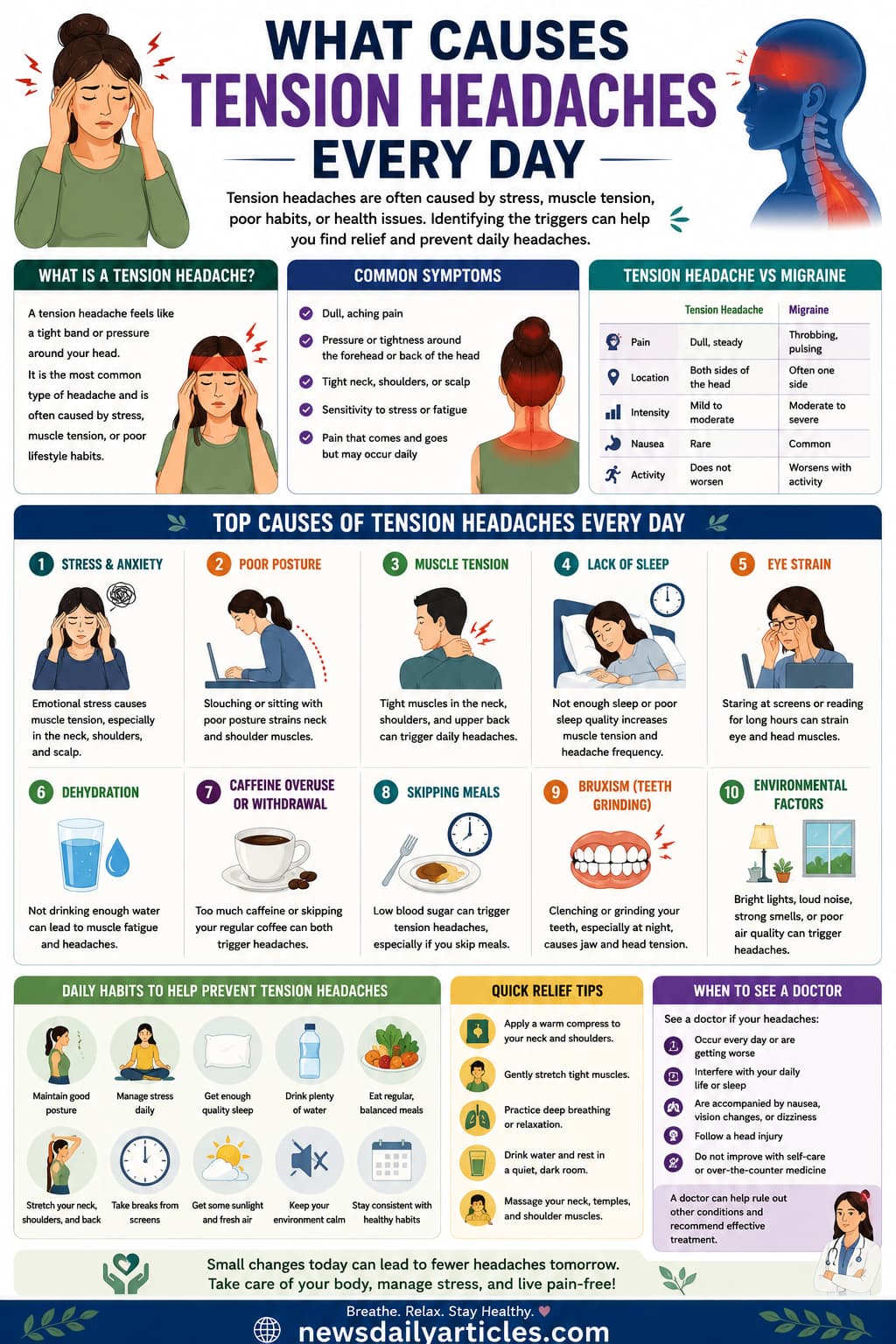
Experiencing tension headaches every day can be frustrating, exhausting, and sometimes worrying. Many people feel persistent pressure around the forehead, temples, scalp, or back of the head without fully understanding what is causing the pain.
Daily tension headaches are often linked to stress, poor posture, muscle tightness, lack of sleep, and unhealthy daily habits. Fortunately, identifying the root cause is the first step toward finding long-term relief.
In this guide, you will learn:
- what daily tension headaches are
- the most common causes
- symptoms to watch for
- natural treatment options
- prevention strategies
- when to seek medical attention
What Are Daily Tension Headaches
Daily tension headaches are headaches that occur frequently or almost every day. They are usually mild to moderate and often feel like:
- a tight band around the head
- forehead pressure
- aching temples
- scalp tightness
- heaviness in the head
Unlike migraines, tension headaches usually:
- do not cause severe nausea
- are less likely to involve visual disturbances
- create dull pressure rather than throbbing pain
However, recurring headaches can still significantly affect:
- work performance
- sleep quality
- concentration
- mood
- overall quality of life
Common Symptoms of Daily Tension Headaches
Symptoms may include:
- dull aching pain
- pressure in the forehead
- pain in the temples
- neck stiffness
- shoulder tightness
- scalp tenderness
- fatigue
- difficulty focusing
Some people also experience:
- jaw tightness
- eye strain
- stress-related muscle tension
Symptoms may worsen during stressful periods or after long workdays.
What Causes Tension Headaches Every Day
There are many possible causes behind recurring tension headaches.
Chronic Stress and Anxiety
Stress is one of the most common triggers of daily headaches.
Emotional stress may cause muscles in the:
- neck
- shoulders
- jaw
- scalp
to tighten continuously.
Long-term stress can keep the body in a constant state of tension, increasing headache frequency.
Common stress-related triggers include:
- work pressure
- financial worries
- emotional stress
- burnout
- anxiety
Poor Posture
Bad posture places strain on the neck and upper back muscles.
This is especially common among:
- office workers
- students
- gamers
- people who use phones frequently
Poor posture can create muscle tension that spreads into the head.
Long Hours of Screen Time
Digital devices can contribute to:
- eye strain
- forehead pressure
- neck stiffness
- tension headaches
Looking down at screens for long periods increases stress on neck muscles.
Lack of Sleep
Poor sleep quality often increases:
- muscle tension
- stress hormones
- sensitivity to pain
Irregular sleep schedules may also trigger recurring headaches.
Dehydration
Even mild dehydration may contribute to:
- fatigue
- head pressure
- muscle tightness
- headaches
Many people simply do not drink enough water during busy days.
Muscle Tightness
Tight muscles in the neck, shoulders, and jaw are a major cause of tension headaches.
Common contributors include:
- sitting too long
- stress
- poor ergonomics
- lack of stretching
Eye Strain
Eye fatigue from screens or poor lighting may create:
- temple pain
- forehead pressure
- headaches behind the eyes
Excessive Caffeine
Too much caffeine or caffeine withdrawal may trigger headaches in some people.
Skipping Meals
Low blood sugar levels can worsen stress headaches and fatigue.
Medication Overuse
Frequent use of pain medications may sometimes lead to rebound headaches.
This can create a cycle of recurring daily headaches.
How to Relieve Daily Tension Headaches Naturally
Fortunately, many natural strategies may help reduce daily headaches over time.
Improve Your Posture
Good posture reduces strain on muscles around the neck and head.
Helpful tips:
- keep screens at eye level
- sit upright
- relax your shoulders
- support your lower back
Stretch Regularly
Gentle stretching helps reduce muscle tension and improve circulation.
Helpful stretches include:
- neck rolls
- shoulder shrugs
- chin tucks
- upper back stretches
Take movement breaks throughout the day.
Stay Hydrated
Drink water consistently instead of waiting until you feel thirsty.
Hydration supports healthy circulation and muscle function.
Manage Stress Daily
Stress management is essential for long-term headache prevention.
Helpful techniques include:
- meditation
- yoga
- deep breathing
- journaling
- mindfulness
Even a few minutes daily may help.
Reduce Screen Time
Helpful screen habits include:
- lowering brightness
- taking regular breaks
- using blue light filters
- improving desk ergonomics
Follow the 20-20-20 rule:
Every 20 minutes, look 20 feet away for 20 seconds.
Improve Sleep Quality
Healthy sleep habits include:
- regular bedtime
- reduced screen use before bed
- supportive pillows
- a quiet sleep environment
Exercise Regularly
Physical activity helps:
- reduce stress hormones
- improve circulation
- loosen tight muscles
- improve sleep
Helpful activities include:
- walking
- stretching
- yoga
- swimming
Eat Balanced Meals
Regular nutritious meals may help stabilize energy levels and reduce headaches.
Helpful foods include:
- fruits
- vegetables
- nuts
- magnesium-rich foods
- lean proteins
Best Home Remedies for Daily Tension Headaches
Natural remedies may help reduce symptoms and support relaxation.
Warm Compress
Heat therapy may relax tight neck and shoulder muscles.
Peppermint Oil
Peppermint oil may create a cooling sensation that reduces discomfort.
Apply diluted oil carefully to:
- temples
- forehead
- neck
Ginger Tea
Ginger may help calm inflammation and promote relaxation.
Warm Shower
Warm water may improve circulation and reduce muscle tightness.
When to See a Doctor
Although tension headaches are usually harmless, medical attention may be necessary if headaches:
- occur daily for long periods
- become severe suddenly
- affect vision or speech
- include numbness or weakness
- follow a head injury
- do not improve with self-care
Persistent headaches may indicate another condition requiring evaluation.
Final Thoughts
Daily tension headaches are often connected to stress, muscle tightness, poor posture, screen time, dehydration, and lack of sleep. Fortunately, many people can reduce headache frequency naturally through healthy habits and consistent self-care.
Simple changes such as improving posture, stretching regularly, staying hydrated, managing stress, and sleeping better can make a major difference over time.
Understanding your triggers is one of the most effective ways to regain comfort and improve overall well-being.
Related Articles
You may also find these guides helpful:
-
- How to Relieve Tension Headache in Forehead Fast
- How to Relieve Neck Tension Headaches Naturally
- Best Home Remedies for Tension Headaches That Actually Work
- Stress Headache Relief Tips for Busy Office Workers
- How to Relieve Head Pressure and Tightness Naturally
- Tension Headache vs Migraine What’s the Difference?
- Best Sleeping Positions to Prevent Tension Headaches
- How to Stop a Tension Headache Immediately at Home
- 10 Minute Stretches That Help Relieve Tension Headaches