

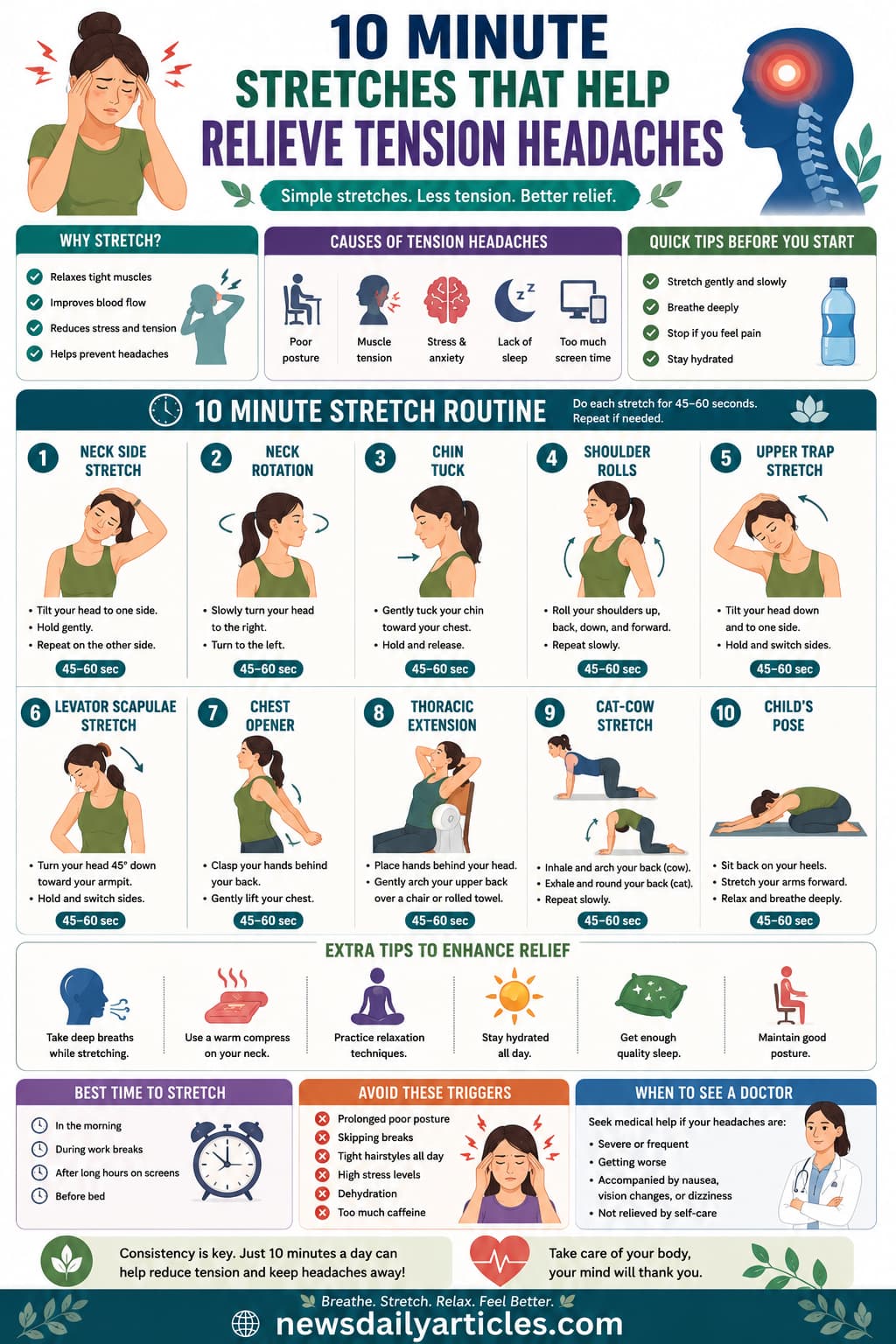
Tension headaches are one of the most common causes of head pain today, especially among people who spend long hours sitting, working on computers, or dealing with daily stress. Tight muscles in the neck, shoulders, and upper back often contribute to pressure in the forehead, temples, and scalp.
The good news is that simple stretching exercises can help relieve tension headaches naturally. Just a few minutes of gentle movement may reduce muscle tightness, improve circulation, and ease stress-related head pain.
In this guide, you will learn:
- why stretching helps tension headaches
- the best 10-minute stretches for relief
- how to reduce neck and shoulder tension
- prevention tips for recurring headaches
- when to seek medical attention
Why Stretching Helps Tension Headaches
Tension headaches are commonly linked to:
- muscle tightness
- poor posture
- stress
- long screen time
- lack of movement
Stretching helps by:
- relaxing tight muscles
- improving blood flow
- reducing pressure in the neck and shoulders
- increasing flexibility
- lowering stress levels
Even short stretching sessions may provide noticeable relief.
Common Signs of Muscle-Related Tension Headaches
You may benefit from stretching if you experience:
- forehead pressure
- aching temples
- tight neck muscles
- shoulder stiffness
- scalp tightness
- headaches after computer use
- pain after sitting too long
These symptoms are especially common among office workers and students.
10 Minute Stretch Routine for Tension Headache Relief
This simple routine can be done:
- at home
- at work
- during study breaks
- after long screen sessions
Move slowly and gently throughout the routine.
Neck Side Stretch
How to Do It
- Sit or stand upright.
- Slowly tilt your head toward one shoulder.
- Hold for 20–30 seconds.
- Repeat on the other side.
Benefits
This stretch helps release tension in:
- neck muscles
- shoulders
- upper back
It may reduce headache pressure connected to muscle tightness.
Chin Tucks
How to Do It
- Sit upright with relaxed shoulders.
- Gently pull your chin backward.
- Hold for 5 seconds.
- Repeat 10 times.
Benefits
Chin tucks help improve posture and reduce strain caused by looking down at screens.
Shoulder Rolls
How to Do It
- Lift your shoulders upward.
- Roll them backward slowly.
- Repeat 10 times.
- Reverse direction.
Benefits
Shoulder rolls help loosen tight upper back and shoulder muscles.
Upper Trapezius Stretch
How to Do It
- Sit upright.
- Place one hand behind your back.
- Tilt your head to the opposite side.
- Hold for 20 seconds.
- Switch sides.
Benefits
This stretch targets muscles commonly associated with tension headaches.
Seated Forward Fold
How to Do It
- Sit comfortably.
- Slowly bend forward.
- Relax your neck and shoulders.
- Hold for 20–30 seconds.
Benefits
This stretch may reduce stress and relax upper body tension.
Chest Opener Stretch
How to Do It
- Clasp your hands behind your back.
- Open your chest gently.
- Pull shoulders backward.
- Hold for 20 seconds.
Benefits
This helps counteract poor posture from sitting and screen use.
Cat-Cow Stretch
How to Do It
- Start on hands and knees.
- Arch your back upward slowly.
- Lower your stomach while lifting your head.
- Repeat gently for 30 seconds.
Benefits
This movement improves spinal flexibility and reduces tension.
Child’s Pose
How to Do It
- Kneel on the floor.
- Sit back toward your heels.
- Stretch your arms forward.
- Rest for 30 seconds.
Benefits
Child’s pose may help relax:
- neck muscles
- shoulders
- back tension
- stress-related tightness
Gentle Neck Rolls
How to Do It
- Slowly rotate your head in a circular motion.
- Move gently without forcing.
- Repeat several times.
Benefits
This may improve neck flexibility and circulation.
Deep Breathing Stretch
How to Do It
- Sit comfortably.
- Raise your arms slowly while inhaling.
- Lower them while exhaling.
- Repeat several times.
Benefits
Deep breathing helps calm the nervous system and reduce stress tension.
Additional Tips to Prevent Tension Headaches
Stretching works best when combined with healthy daily habits.
Improve Your Posture
Poor posture increases neck and shoulder strain.
Helpful tips:
- keep screens at eye level
- sit upright
- relax your shoulders
- support your lower back
Take Frequent Movement Breaks
Avoid sitting too long without moving.
Even short walks may help improve circulation.
Stay Hydrated
Dehydration may worsen headaches and muscle tension.
Drink water consistently throughout the day.
Reduce Stress
Stress is one of the biggest headache triggers.
Helpful stress management techniques include:
- meditation
- breathing exercises
- yoga
- mindfulness
Limit Excessive Screen Time
Long screen sessions often contribute to:
- eye strain
- forehead pressure
- neck tension
Follow the 20-20-20 rule:
Every 20 minutes, look 20 feet away for 20 seconds.
Sleep Properly
Healthy sleep habits help reduce tension and muscle fatigue.
Aim for:
- consistent sleep schedule
- supportive pillows
- comfortable sleeping posture
When to See a Doctor
Although tension headaches are usually harmless, medical attention may be necessary if headaches:
- become severe suddenly
- happen very frequently
- include dizziness or numbness
- affect vision
- do not improve with stretching or self-care
Persistent headaches may indicate another condition.
Final Thoughts
Simple stretching exercises can be an effective natural way to relieve tension headaches caused by stress, poor posture, and muscle tightness. Even a short 10-minute routine may help relax the neck, shoulders, and upper back while reducing pressure in the head.
Combining stretching with hydration, stress management, good posture, and regular movement may significantly reduce recurring headaches over time.
Small daily habits often create the biggest long-term improvements.
Related Articles
You may also find these guides helpful:
- How to Relieve Tension Headache in Forehead Fast
- How to Relieve Neck Tension Headaches Naturally
- Best Home Remedies for Tension Headaches That Actually Work
- Stress Headache Relief Tips for Busy Office Workers
- How to Relieve Head Pressure and Tightness Naturally
- Tension Headache vs Migraine What’s the Difference?
- Best Sleeping Positions to Prevent Tension Headaches
- How to Stop a Tension Headache Immediately at Home
- What Causes Tension Headaches Every Day