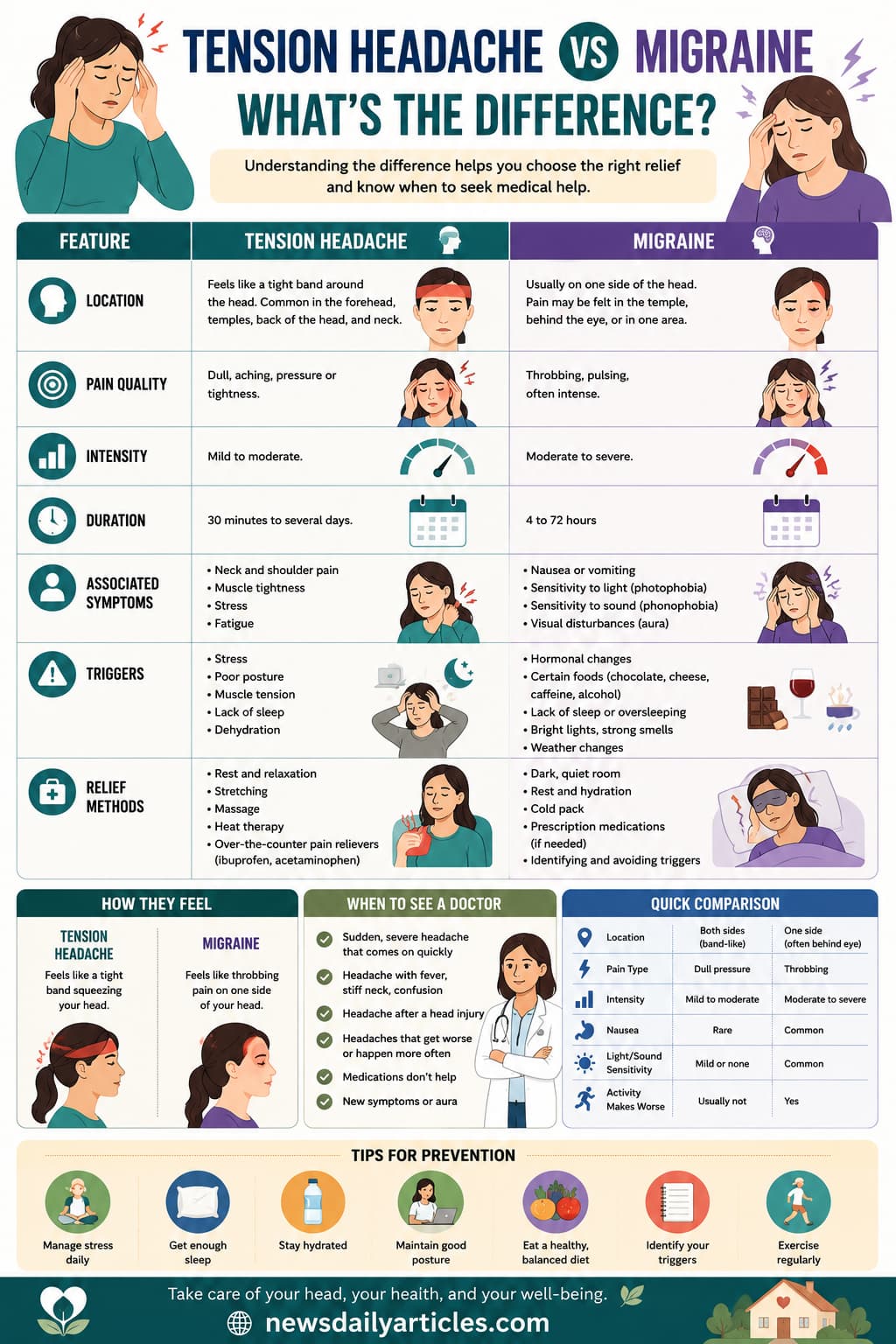
Many people confuse tension headaches with migraines because both can cause head pain and discomfort. However, these two conditions are very different in terms of symptoms, causes, triggers, and treatment methods.
Understanding the difference between a tension headache and a migraine can help you find the right relief strategy and know when medical attention may be necessary.
In this guide, you will learn:
- what tension headaches are
- what migraines are
- the key differences between them
- common symptoms and triggers
- treatment options
- prevention tips
What Is a Tension Headache
A tension headache is the most common type of headache. It is often caused by:
- stress
- muscle tension
- poor posture
- fatigue
- dehydration
- long screen time
Tension headaches usually feel like:
- a tight band around the head
- dull aching pain
- forehead pressure
- tight scalp muscles
- neck and shoulder stiffness
The pain is typically mild to moderate and affects both sides of the head.
What Is a Migraine
A migraine is a neurological condition that causes more intense head pain and additional symptoms.
Migraines may involve:
- throbbing pain
- nausea
- vomiting
- sensitivity to light
- sensitivity to sound
- visual disturbances
Migraine pain is often stronger and may affect one side of the head more than the other.
Some migraines can last for hours or even days.
Main Differences Between Tension Headaches and Migraines
Understanding the key differences can help identify the type of headache more accurately.
Pain Type
Tension Headache
- dull pressure
- tightness
- squeezing sensation
Migraine
- throbbing or pulsating pain
- stronger intensity
Pain Location
Tension Headache
Usually affects:
- both sides of the head
- forehead
- temples
- scalp
- neck
Migraine
Often affects:
- one side of the head
- behind one eye
- temples
However, migraines can sometimes affect both sides as well.
Severity of Pain
Tension Headache
- mild to moderate
- uncomfortable but manageable
Migraine
- moderate to severe
- may interfere with daily activities
Additional Symptoms
Tension Headache
Usually does not include:
- nausea
- severe light sensitivity
- visual disturbances
Migraine
Often includes:
- nausea
- vomiting
- dizziness
- light sensitivity
- sound sensitivity
- aura symptoms
Duration
Tension Headache
May last:
- 30 minutes
- several hours
Migraine
May last:
- several hours
- 1–3 days
Common Triggers
Tension Headache Triggers
Common triggers include:
- stress
- anxiety
- poor posture
- muscle tension
- lack of sleep
- dehydration
- screen time
Migraine Triggers
Common migraine triggers include:
- hormonal changes
- certain foods
- strong smells
- bright lights
- sleep disruption
- stress
- weather changes
Some people have very specific migraine triggers.
What Causes Tension Headaches
Tension headaches are often linked to tight muscles around the:
- neck
- shoulders
- scalp
- jaw
Stress and poor posture are major contributors.
Office workers and people who spend long hours on computers commonly experience tension headaches.
What Causes Migraines
Migraines involve complex neurological and vascular changes in the brain.
Although the exact cause is not fully understood, migraines may involve:
- genetic factors
- nerve signaling changes
- brain chemical imbalances
Migraines tend to run in families more often than tension headaches.
How to Relieve a Tension Headache
Many tension headaches improve with natural remedies and self-care.
Helpful methods include:
- hydration
- stretching
- massage
- heat therapy
- stress management
- posture correction
- rest
How to Relieve a Migraine
Migraine relief often requires:
- resting in a dark quiet room
- avoiding triggers
- hydration
- medical treatment
- prescription medications in some cases
Some people benefit from identifying and tracking migraine triggers.
Best Home Remedies for Tension Headaches
Natural remedies may help reduce muscle tension and head pressure.
Warm Compress
Heat helps relax tight muscles.
Neck and Shoulder Stretching
Stretching improves circulation and reduces stiffness.
Peppermint Oil
Peppermint oil may create a cooling sensation that eases discomfort.
Deep Breathing
Stress reduction may calm muscle tension and headaches.
Better Posture
Improving posture may reduce pressure on neck and shoulder muscles.
Lifestyle Tips to Prevent Headaches
Healthy daily habits can help reduce both tension headaches and migraines.
Stay Hydrated
Drink water consistently throughout the day.
Sleep Consistently
Aim for:
- regular sleep schedule
- enough nightly sleep
- reduced screen time before bed
Manage Stress
Helpful techniques include:
- meditation
- yoga
- breathing exercises
- mindfulness
Exercise Regularly
Movement helps:
- improve circulation
- reduce stress
- improve sleep
- reduce muscle tension
Reduce Screen Time
Frequent breaks may help reduce:
- eye strain
- forehead pressure
- neck stiffness
Follow the 20-20-20 rule during computer use.
When to See a Doctor
Seek medical attention if headaches:
- become severe suddenly
- happen very frequently
- include confusion or weakness
- affect vision or speech
- worsen over time
- do not improve with treatment
Medical evaluation is especially important if symptoms change suddenly.
Final Thoughts
Although tension headaches and migraines may seem similar, they are different conditions with different symptoms, triggers, and treatment approaches. Tension headaches are usually linked to stress and muscle tension, while migraines involve more complex neurological symptoms.
Understanding the differences can help you choose the right treatment, reduce triggers, and improve your overall quality of life.
Healthy habits such as stress management, hydration, posture improvement, and proper sleep may help reduce both types of headaches naturally.
Related Articles
You may also find these guides helpful:
- How to Relieve Tension Headache in Forehead Fast
- How to Relieve Neck Tension Headaches Naturally
- Best Home Remedies for Tension Headaches That Actually Work
- Stress Headache Relief Tips for Busy Office Workers
- How to Relieve Head Pressure and Tightness Naturally
- Best Sleeping Positions to Prevent Tension Headaches
- How to Stop a Tension Headache Immediately at Home
- 10 Minute Stretches That Help Relieve Tension Headaches
- What Causes Tension Headaches Every Day