

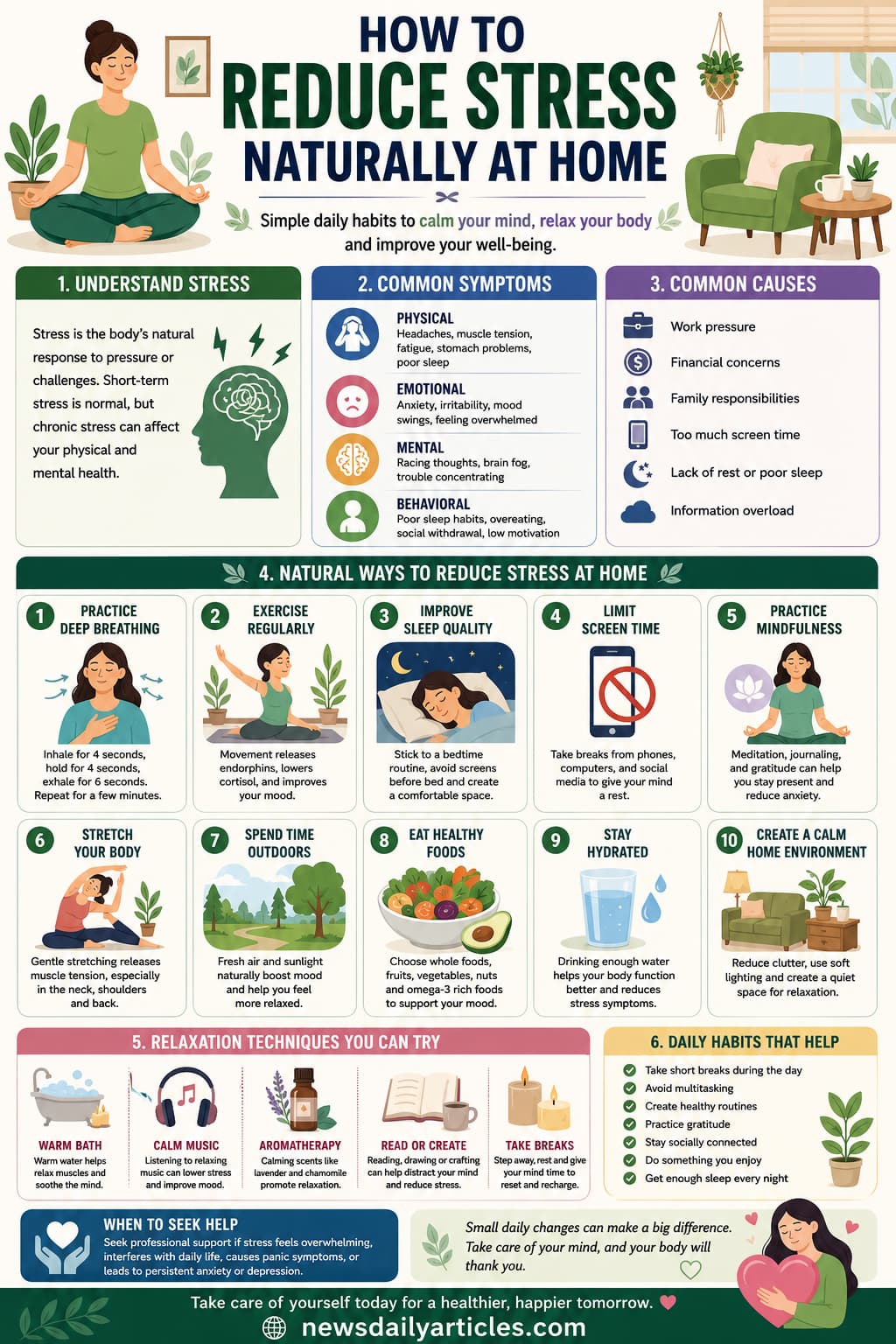
Stress has become one of the most common health challenges in modern life. Busy schedules, financial pressure, work demands, lack of sleep, and constant screen time can leave many people feeling mentally and physically exhausted.
Over time, stress may affect:
- sleep quality
- mood
- energy levels
- concentration
- muscle tension
- overall health
The good news is that there are many natural ways to reduce stress at home without expensive treatments or complicated routines. Simple daily habits can help calm the nervous system, improve emotional balance, and support long-term wellness.
In this guide, you will learn:
- common causes of stress
- how stress affects the body
- natural stress relief techniques
- healthy daily habits
- home remedies for relaxation
- long-term stress management tips
What Is Stress
Stress is the body’s natural reaction to pressure or challenges. When stress occurs, the body releases hormones like:
- cortisol
- adrenaline
These hormones help the body respond quickly to difficult situations.
Short-term stress can sometimes improve focus and alertness. However, chronic stress may negatively affect both physical and mental health.
Common Symptoms of Stress
Stress can affect people in many different ways.
Physical Symptoms
- headaches
- neck and shoulder tension
- fatigue
- muscle tightness
- digestive discomfort
- poor sleep
- jaw clenching
Emotional Symptoms
- anxiety
- irritability
- mood swings
- feeling overwhelmed
- sadness
Mental Symptoms
- racing thoughts
- difficulty concentrating
- brain fog
- forgetfulness
Recognizing these signs early can help prevent long-term problems.
What Causes Stress at Home
Many everyday situations may contribute to stress.
Work Pressure
Remote work, deadlines, and multitasking can increase mental strain.
Financial Concerns
Money worries are a major source of emotional stress for many people.
Family Responsibilities
Balancing parenting, household duties, and personal needs can feel overwhelming.
Too Much Screen Time
Constant phone and computer use may overstimulate the brain and increase stress levels.
Lack of Rest
Poor sleep and insufficient recovery time may worsen emotional tension.
How to Reduce Stress Naturally at Home
Fortunately, many natural stress relief techniques can be practiced easily at home.
Practice Deep Breathing
Deep breathing helps activate the body’s relaxation response.
Try this simple exercise:
- inhale slowly for 4 seconds
- hold for 4 seconds
- exhale slowly for 6 seconds
Repeat for several minutes.
Deep breathing may help:
- calm the nervous system
- reduce muscle tension
- slow the heart rate
- improve relaxation
Create a Calm Home Environment
Your surroundings can affect stress levels significantly.
Helpful ideas:
- reduce clutter
- use soft lighting
- keep spaces organized
- create quiet relaxation areas
A peaceful environment may help the brain feel calmer.
Exercise Regularly
Physical activity is one of the best natural stress relievers.
Exercise helps:
- lower cortisol levels
- improve mood
- release endorphins
- reduce tension
Helpful activities include:
- walking
- yoga
- stretching
- dancing
- home workouts
Even short movement sessions may improve stress levels.
Improve Sleep Quality
Good sleep is essential for stress recovery.
Helpful sleep habits include:
- consistent bedtime
- reducing screen time before bed
- keeping the bedroom dark and quiet
- avoiding caffeine late in the day
Better sleep often leads to lower stress levels.
Limit Screen Time
Constant notifications and digital overload may increase anxiety and mental fatigue.
Helpful tips:
- take phone breaks
- avoid screens before bed
- limit social media use
- spend more time offline
Reducing screen exposure may help calm the mind.
Practice Mindfulness and Meditation
Mindfulness helps focus attention on the present moment instead of stressful thoughts.
Simple mindfulness activities include:
- meditation
- quiet breathing
- journaling
- gratitude practice
Even a few minutes daily may improve emotional balance.
Spend Time Outdoors
Fresh air and sunlight may help reduce stress naturally.
Outdoor activities may include:
- walking
- gardening
- relaxing outside
- light exercise
Nature often has a calming effect on the mind.
Stretch Tight Muscles
Stress commonly causes tightness in the:
- neck
- shoulders
- upper back
- jaw
Gentle stretching may help relieve physical tension.
Helpful stretches include:
- neck rolls
- shoulder shrugs
- upper back stretches
Drink Enough Water
Dehydration may worsen:
- fatigue
- headaches
- irritability
- concentration problems
Drink water consistently throughout the day.
Eat Stress-Reducing Foods
Healthy nutrition supports emotional wellness.
Helpful foods include:
- leafy greens
- nuts
- bananas
- berries
- whole grains
- omega-3 rich foods
Reduce excessive:
- sugar
- caffeine
- highly processed foods
Best Relaxation Techniques at Home
Relaxation techniques may help calm the body and mind naturally.
Warm Baths or Showers
Warm water may relax muscles and improve comfort.
Listening to Calm Music
Relaxing music may help reduce anxiety and mental tension.
Aromatherapy
Some calming scents may promote relaxation.
Popular options include:
- lavender
- peppermint
- chamomile
Reading or Creative Activities
Activities like reading, drawing, or crafting may help reduce mental overload.
Daily Habits That Help Lower Stress
Consistency is important for long-term stress management.
Helpful habits include:
- taking breaks regularly
- avoiding multitasking
- creating healthy routines
- staying socially connected
- practicing gratitude
- making time for relaxation
Small daily improvements can create lasting results.
How Stress Affects the Body Long Term
Chronic stress may increase the risk of:
- tension headaches
- poor sleep
- digestive problems
- muscle pain
- burnout
- anxiety symptoms
Managing stress early may help protect long-term health.
When to Seek Professional Help
Natural stress management techniques are helpful, but some situations require additional support.
Seek professional help if stress:
- becomes overwhelming
- interferes with daily life
- causes panic symptoms
- severely affects sleep
- leads to persistent anxiety or depression
Support from healthcare professionals can be valuable.
Final Thoughts
Stress is a normal part of life, but chronic stress should not be ignored. Fortunately, many natural stress relief techniques can be practiced easily at home to improve both mental and physical well-being.
Simple habits such as better sleep, regular exercise, mindfulness, hydration, stretching, and reducing screen time may significantly lower stress levels over time.
Consistency and self-care are key to building a calmer, healthier lifestyle naturally.
Related Articles
You may also find these guides helpful: