

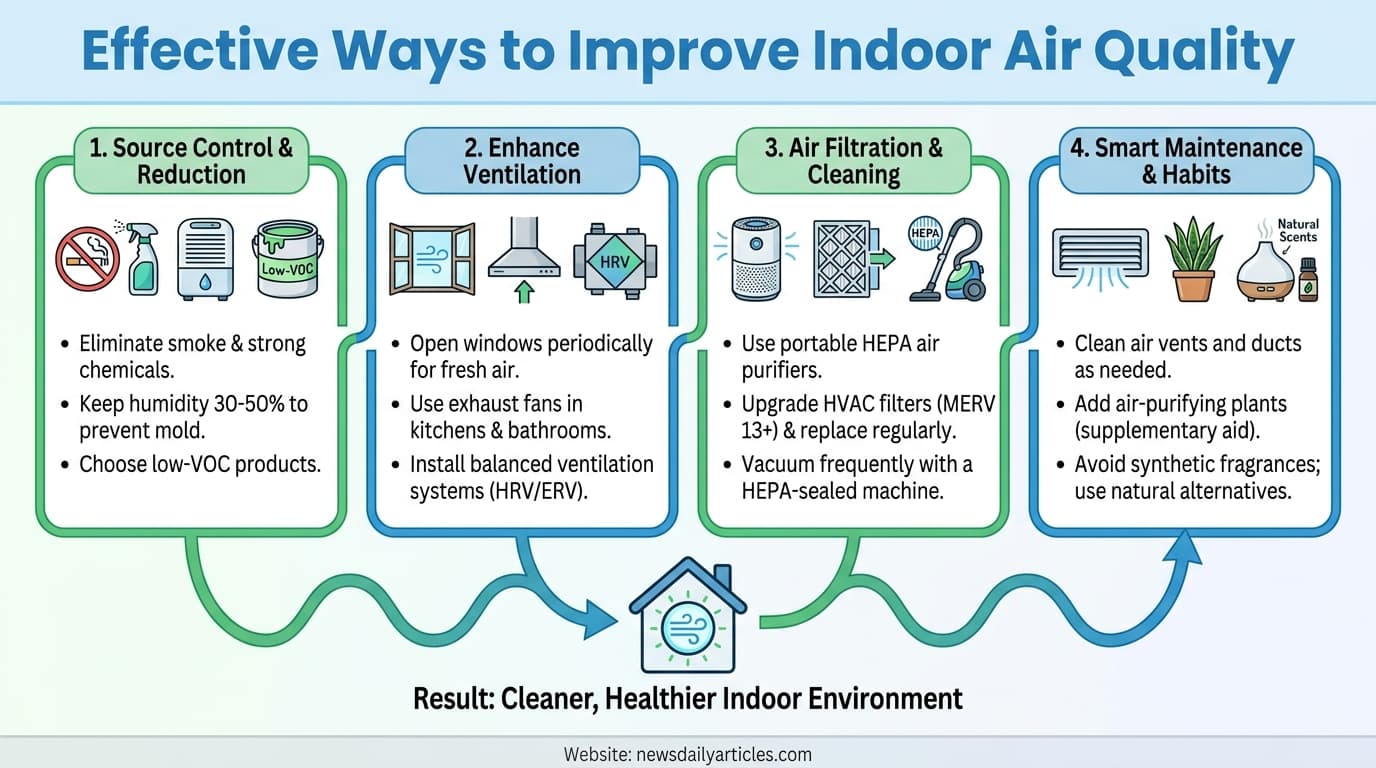
We often think of air pollution as an outdoor problem—smog, car exhaust, and industrial fumes. However, scientific research consistently shows that the air inside our homes, offices, and other buildings can be more polluted than the air outside. Since most modern professionals spend upwards of 90% of their time indoors, learning effective ways to improve indoor air quality is one of the most impactful steps you can take for your long-term respiratory health and cognitive performance.
In this guide, we will explore practical, science-backed strategies to purify your living space and create a sanctuary of fresh air.
1. Optimize Natural and Mechanical Ventilation
The primary cause of poor indoor air quality is “stagnation.” When air doesn’t circulate, pollutants like carbon dioxide, volatile organic compounds (VOCs), and moisture build up to unhealthy levels.
The Power of Cross-Ventilation
The simplest and most cost-effective way to improve air quality is to open your windows. Even in winter or during high-pollen seasons, opening windows on opposite sides of your home for just 10 to 15 minutes a day can create a cross-breeze that flushes out stale air. This is especially important after cooking, cleaning, or using hobby materials like glue or paint.
Using Exhaust Fans Wisely
Always use the exhaust fans in your kitchen and bathroom. In the kitchen, cooking (especially with gas stoves) releases nitrogen dioxide and carbon monoxide. In the bathroom, fans remove excess moisture that leads to mold and mildew. If you are currently upgrading your home infrastructure to be more efficient, you might also consider an overview of the roof replacement process to ensure your attic and upper levels are properly ventilated to prevent heat and moisture trap.
2. Incorporate Air-Purifying Indoor Plants
Nature has its own filtration system. While a single plant won’t replace a high-tech air purifier, a collection of specific “clean-air” plants can significantly reduce trace amounts of toxins like benzene and formaldehyde.
Best Species for Indoor Air
Plants like the Spider Plant, Snake Plant (Mother-in-Law’s Tongue), and Peace Lily are famous for their ability to thrive indoors while scrubbing the air. Beyond just cleaning the air, gardening indoors has a therapeutic effect on your mental well-being. For beginners, a great way to start is by learning how to grow indoor herbs, which provides you with fresh oxygen and organic ingredients for your kitchen simultaneously.
3. Control Source Pollutants and Allergens
The best way to manage air quality is to prevent pollutants from entering your home in the first place. This requires a proactive approach to cleaning and product selection.
Minimize Synthetic Fragrances
Many air fresheners, scented candles, and laundry detergents contain phthalates and other chemicals that diminish air quality. Opt for essential oil diffusers or soy-based candles with natural scents. Better yet, use charcoal bags to absorb odors rather than masking them with synthetic sprays.
Implement a “No-Shoes” Policy
Your shoes carry more than just dirt; they bring in pesticides, heavy metals, and outdoor allergens. By leaving shoes at the door, you significantly reduce the amount of lead dust and toxins that settle into your carpets and flooring.
4. Manage Dust, Pet Dander, and Humidity
Dust is a complex mixture of dead skin cells, hair, fibers, and microscopic organisms like dust mites. Managing these particles requires consistent maintenance.
High-Efficiency Vacuuming
Use a vacuum cleaner equipped with a HEPA (High-Efficiency Particulate Air) filter. Unlike standard vacuums, HEPA filters trap 99.97% of dust, pollen, and bacteria, preventing them from being blown back out into the air you breathe. Target high-traffic areas and soft surfaces like curtains and rugs at least twice a week.
Monitor Humidity Levels
The ideal indoor humidity level is between 30% and 50%. If it’s too high, you invite mold growth and dust mites. If it’s too low, your respiratory tract becomes irritated, making you more susceptible to infections. Use a hygrometer to monitor levels and employ a dehumidifier or humidifier as needed.
5. Upgrade Your Filtration Systems
If you have a central heating or air conditioning system (HVAC), it serves as the “lungs” of your home. If the filters are dirty, the system is simply recirculating dust and allergens.
Choose the Right Filters
Upgrade your HVAC filters to those with a higher MERV (Minimum Efficiency Reporting Value) rating. A MERV rating of 11 to 13 is generally sufficient for residential homes to capture fine particles without straining the system’s motor. Make a habit of changing these filters every 60 to 90 days.
Conclusion: Breathing Easier Every Day
Improving your indoor air quality doesn’t require an overnight renovation. By starting with better ventilation, adding air-purifying greenery, and maintaining a clean environment, you can drastically reduce your exposure to indoor pollutants. A clean-air home is the foundation for better sleep, sharper focus, and a healthier life for you and your family.